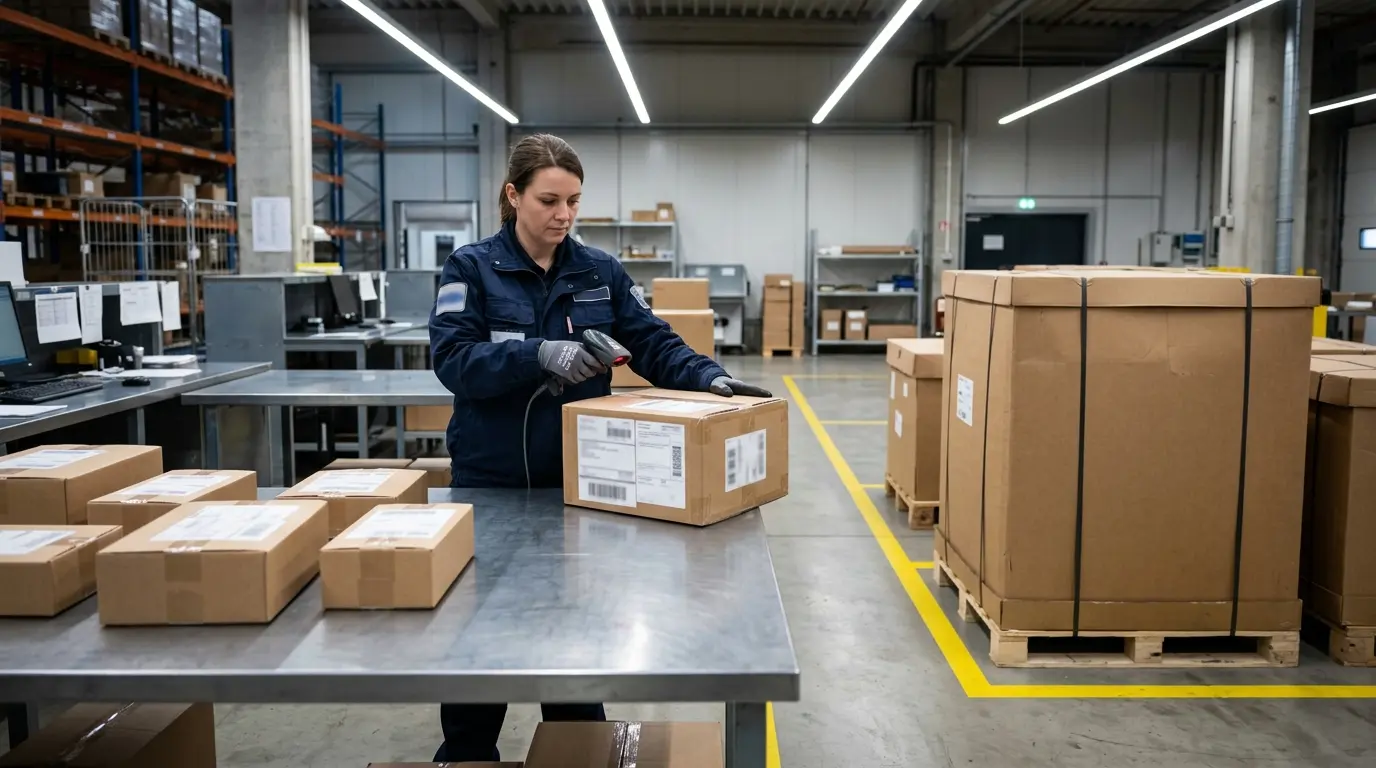
A seller established outside the EU can still fall within PPWR and national packaging EPR rules when it makes packaged products available to EU end users. The answer depends on the contractual seller, importer, destination, fulfilment flow and whether an EPR authorised representative must be appointed in that Member State.
When a non-EU seller enters the PPWR flow
The official PPWR text defines manufacturer, importer, distributor, producer, end user, online platform and fulfilment roles. Under Articles 44 and 45 of the Regulation, provisions govern producer registration, extended producer responsibility, authorised representatives and information checks. Micro-enterprise provisions are limited to named contexts in the legal text and do not create a general exemption from packaging EPR.
The approved sources do not establish that a third-country seller is outside the scope of packaging rules simply because its corporate seat is located outside the European Union. Commission guidance interprets selected definitions and obligations, including manufacturer responsibility and technical documentation, but it does not replace the Regulation or individual Member State procedures.
Continue with the dedicated guide to selling to the EU from outside the EU. Selling into the EU from outside the EU.
Identify the importer and first making available
The official PPWR text establishes specific definitions for an importer placing packaged products on the Union market from a third country. Under the statutory framework, producer obligations attach to entities that make packaging or packaged products available on a Member State market for the first time. Technical documentation and manufacturer responsibility rules apply in accordance with the legal text and supporting Commission guidance.

The approved sources do not establish that every transaction involving an overseas supplier automatically assigns importer status to the overseas entity. Determining the statutory role requires evaluating whether an EU-based entity acts as the importer or whether the third-country seller supplies directly to the end user.
Continue with the dedicated overview of the Packaging and Packaging Waste Regulation. PPWR overview.
Direct-to-consumer shipments
The official text of PPWR governs transactions where packaged goods are supplied directly to an end user located within a Member State. In distance sales arrangements from third countries, the entity making packaged products available to the end user falls under the scope of producer registration and extended producer responsibility requirements. Commission guidance and FAQ materials address practical role questions across these direct supply arrangements.
The approved sources do not establish that small shipment volumes or direct parcel deliveries automatically avoid destination Member State EPR procedures. The Commission FAQ represents supporting guidance and indicates that operational rules must be read together with the legal text and specific destination-level requirements.
Continue with the dedicated guide to national packaging EPR requirements. Packaging EPR rules.
Marketplace and fulfilment arrangements
The official PPWR text defines distinct roles and obligations for online platform operators and fulfilment service providers. Article 45 establishes information checks that online platforms must execute regarding producer registration. Commission guidance interprets these provisions, confirming that online platform checks verify registration data across economic operators presenting packaged products to buyers.
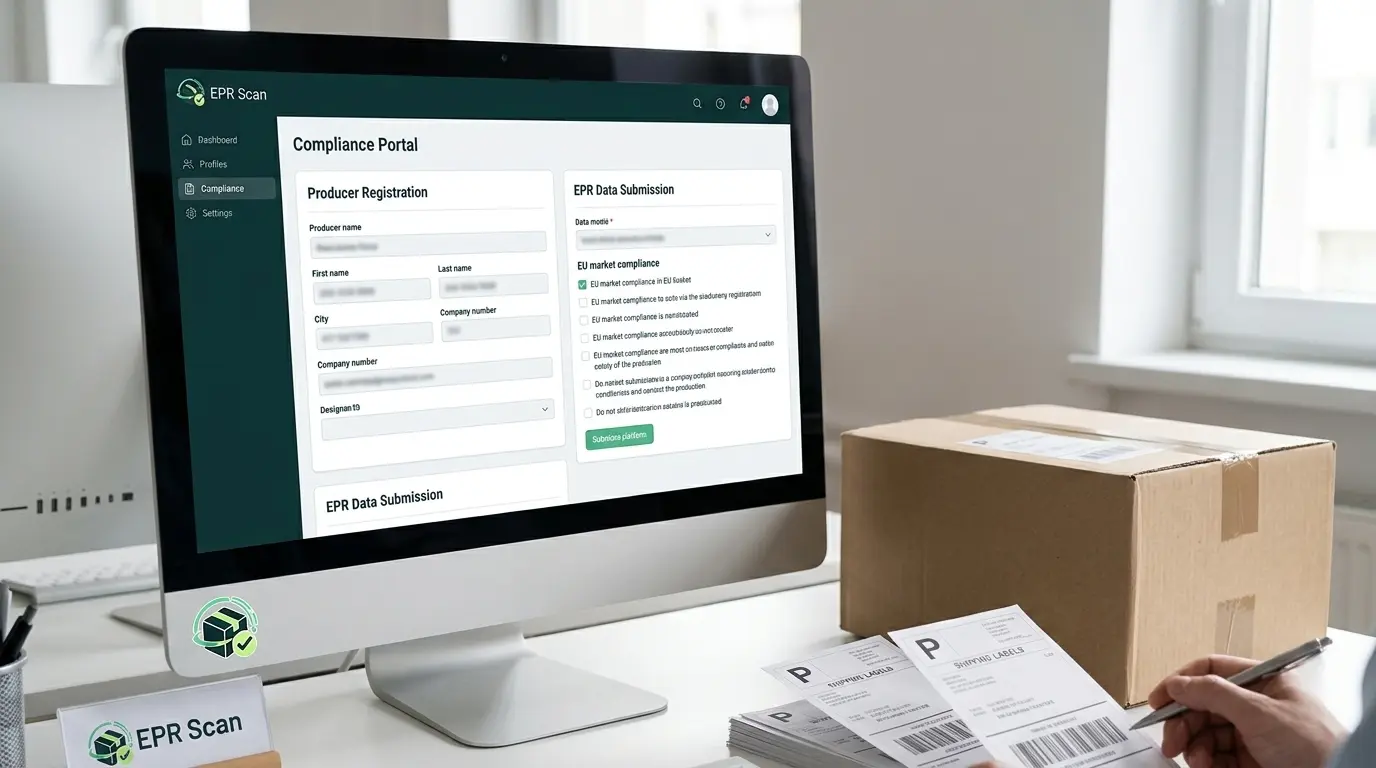
The approved sources do not establish that an online platform automatically assumes every seller obligation under packaging EPR. A marketplace operating an interface does not replace the producer or absolve a third-country seller from underlying registration duties unless explicitly defined by Member State rules.
EPR authorised representatives
Articles 44 and 45 of the PPWR text govern producer registration, EPR compliance structures and the appointment of an authorised representative. When a producer is established outside a destination Member State, the regulatory framework provides for authorised representation to manage statutory duties in that jurisdiction. Commission guidance addresses the scope of authorised representation and related technical documentation handling.
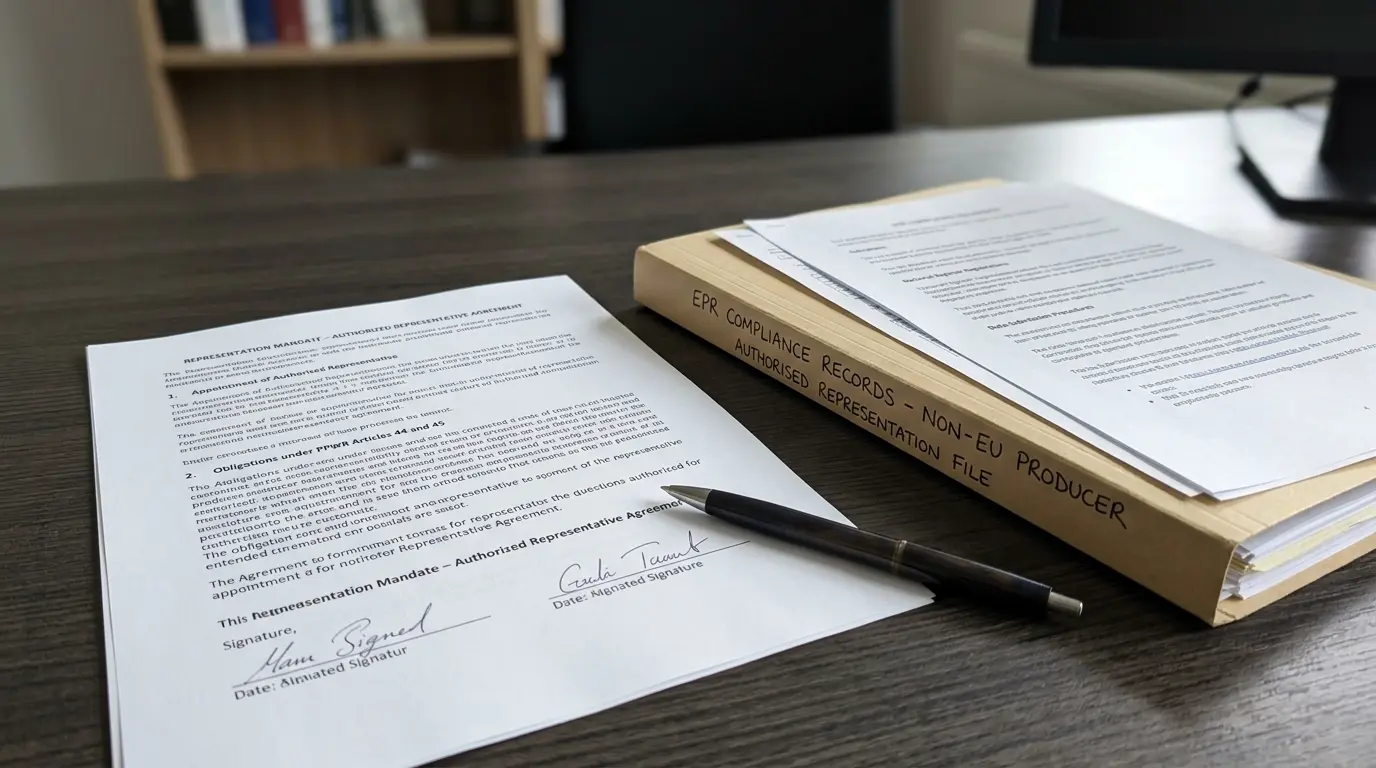
The approved sources do not establish that one single EU registration or a single appointed representative universally satisfies all packaging EPR procedures across every Member State. Commission guidance and FAQ documents confirm that destination-level procedures and competent authority registers govern local administrative compliance.
Three non-EU seller scenarios
The official PPWR text and supporting Commission guidance differentiate between supply chains featuring an independent EU importer, direct sales to an EU end user, and inventory stored in EU fulfilment centres. Each distribution flow alters which commercial party acts as the producer or importer responsible for technical documentation, producer registration and packaging data submission. Articles 44 and 45 set the statutory baseline for these operator distinctions.
The approved sources do not establish that these three supply arrangements share an identical compliance mechanism or fee structure across all Member States. The Commission FAQ confirms that role interpretations depend on the exact commercial agreements, the identity of the contractual seller, and national registration rules.
Country-by-country verification workflow
Articles 44 and 45 of the PPWR establish the baseline requirements for national producer registers, extended producer responsibility reporting, and marketplace verification checks. Commission guidance and FAQ documents interpret how economic operators must structure technical records and confirm compliance across national territories. Competent authority procedures in destination Member States maintain administrative jurisdiction over local producer registers.
The approved sources do not establish that standard platform tools or third-party registration certificates provide complete legal compliance across all destination markets. Legal text, supporting guidance and competent authority rules require separate evaluation for each destination market where products are made available.
Continue with the dedicated directory of Member State EPR registers and procedures. Member State country guides.
| Supply Flow Role | Statutory Operator Status | Key PPWR Reference | Source Evidence Boundary |
|---|---|---|---|
| Third-country seller direct to EU end user | Producer via distance sales | Articles 44 and 45 | Subject to destination registration; micro-enterprise status does not create general EPR exemption. |
| Third-country seller selling to EU commercial buyer | EU buyer acts as importer | Articles 44 and 45 | Importer assumes first making available duties; does not prove non-EU seller retains producer role. |
| Non-EU merchant on online platform | Independent economic operator | Article 45 platform checks | Platform executes information checks; does not automatically assume every seller obligation. |
| Non-EU entity appointing EU representative | Producer via authorised representative | Articles 44 and 45 | Authorised representation covers designated duties; one EU registration does not replace national procedures. |
Country-by-country verification workflow
- List each destination Member State.
- Separate materially different direct, marketplace and fulfilment flows.
- Identify the contractual seller, importer, packaging party and end-user status.
- Verify the current producer register and packaging EPR procedure with the competent destination source.
- Record registration evidence, reporting periods and any third-party service separately.
- Recheck the cited official sources before acting.
- Confirm that all contractual, importer, and destination details align across the recorded supply arrangements.
Packaging compliance obligations depend directly on the contractual role, the commercial supply route, and the specific destination Member State where packaged items reach the end user.
FAQ
Does an online platform automatically take over all EPR obligations for non-EU sellers?
No. The approved sources establish that online platforms are subject to information checks under Article 45, but a marketplace does not automatically assume every seller packaging obligation.
Are small overseas businesses exempt from PPWR packaging EPR rules?
No. Micro-enterprise provisions in the PPWR text are limited to specific named contexts and do not create a general exemption from national packaging EPR registration.
Does a single registration in one EU country cover all Member States?
No. Articles 44 and 45 and Commission guidance confirm that one EU registration does not replace national packaging EPR procedures across separate destination Member States.
Who is considered the producer in direct-to-consumer cross-border shipments?
Under the PPWR framework, the entity making packaged products available directly to an end user in a Member State through distance sales falls within the producer scope and may need to appoint an authorised representative.
What is the primary role of an authorised representative under PPWR?
An authorised representative is appointed pursuant to Articles 44 and 45 to fulfill producer registration and packaging EPR duties in a Member State on behalf of an entity established outside that jurisdiction.